Greece's Supreme Court Clears Andreas Georgiou, Vindicating Years of ASA and International Advocacy
Greece's Supreme Court has fully acquitted Andreas Georgiou, former president of the Hellenic Statistical Authority, known as ELSTAT, on charges of breach of duty, ending a legal ordeal that began September 19, 2011, and spanned 15 years. In a decision issued August 11, the court annulled Georgiou's 2017 conviction—for which he had originally been sentenced to two years in prison, suspended for three—finding that the lower court had misapplied the law. It was the last of seven legal actions brought against him, all of which have now been repelled.
Georgiou, a veteran statistician at the International Monetary Fund, was appointed to lead ELSTAT in 2010 as Greece sought to restore the credibility of its statistics in the early months of its debt crisis. Under his leadership, ELSTAT notified Eurostat, the EU's statistical office, of revised fiscal data for 2006–2009 without first submitting the figures to a vote of ELSTAT's board. The revision raised Greece's reported 2009 budget deficit from 13.6% to 15.4% of GDP and the government debt from 115.1% to 126.8% of GDP at the end of 2009. Revisions of similar magnitude were also made for the years 2006–2008. Eurostat, the statistical office of the European Union, validated these estimates. The previous estimates had received “reservations” from Eurostat. Indeed, Eurostat validated all fiscal figures produced during Georgiou’s five-year tenure, breaking a pattern of many years in which Eurostat routinely could not validate Greece’s public finance statistics.
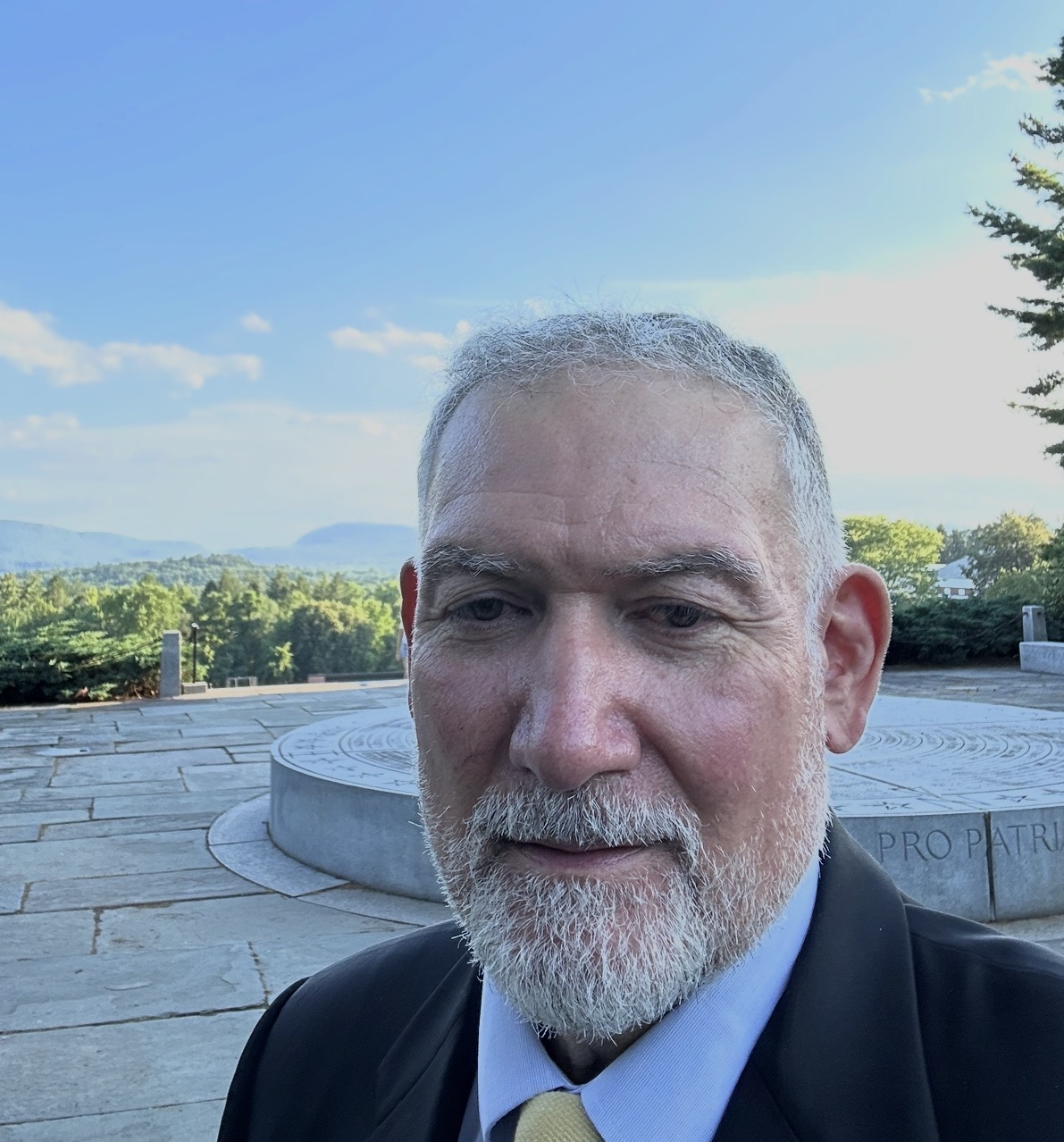
Pictured: Andreas GeorgiouFor doing his job, Georgiou paid an extraordinary personal price. Rather than being commended for correcting the record, he spent nearly a decade and a half fighting prosecutions, convictions, and annulled acquittals—including a separate case in which he was repeatedly acquitted—alleging he had inflated the deficit figures as part of a scheme to justify austerity. Though the proceedings consumed his career and finances and took a lasting toll on him and his family, he continued to insist, case after case, that the fight was never personal. The overarching issue was whether official statisticians can do their jobs without fear of political retaliation. Throughout, his defense maintained the case violated the European Statistics Code of Practice, whose professional-independence principle (indicator 1.4) gives the head of a national statistical office "sole responsibility" for deciding on statistical methods, standards, and the content and timing of releases—a standard written into both EU and Greek law.
The Supreme Court's ruling follows a 2023 decision by the European Court of Human Rights, which found Georgiou had not received a fair trial in Greece.
In a September 10 email to friends and supporters, Georgiou called the ruling belated but significant, writing that it sends the right signal to official statisticians and politicians in Greece, the EU, and beyond that the principle of professional independence must be observed—a victory, in his words, for statistical ethics. He thanked Konstantinos Papadiamantis and the Potamitis Vekris law firm, which represented him pro bono for the last nine years of the legal proceedings against him, and those who stood by him through what he described as long years of persecution.
Georgiou's case drew sustained international criticism over the years, including repeated calls from the EU, the International Monetary Fund, and statistical and economic organizations worldwide for Greek authorities to end the prosecutions. The American Statistical Association has advocated for his exoneration since 2017, when its board of directors first issued a statement on his case. In the years since, the ASA has issued multiple board statements, circulated a sign-on letter that drew support from more than 1,100 individuals—including nine Nobel laureates—and highlighted his case repeatedly in ASA communications, because the prosecutions threatened both Georgiou personally and the broader principle of statistical independence that underpins trustworthy official statistics.
“No statistician should have to spend 15 years and endure what Andreas Georgiou and his family endured simply for doing his job with integrity," said Ron Wasserstein, executive director of the American Statistical Association. "We're relieved this chapter is finally closed, but we don't forget what it cost him. His case will remain a defining reminder of why professional independence for official statisticians has to be protected, not just in Greece, but everywhere."